
Understanding AI Trading Bots and Their Market Impact
🤖 Discover how AI trading bots operate in financial markets, their pros and cons, and essential tips for Nigerian traders to use them wisely in global trading.
Edited By
Charlotte Reed
Trading bots are computer programmes designed to automate the buying and selling of assets like stocks, forex, and cryptocurrencies. In Nigeria, where markets can be volatile and trading hours long, these bots offer a way to execute trades swiftly and without emotional bias. Whether you’re trading on the Nigerian Stock Exchange (NGX) or dabbling in cryptocurrencies like Bitcoin or Ethereum on local platforms such as Bundle Africa or BuyCoins, bots help manage trades efficiently.
These tools operate by following predefined rules set by the trader. For example, a bot might be programmed to buy shares of a company if the price drops below ₦200 and sell when it hits ₦250. This removes human hesitation and speeds up execution, which is crucial when markets shift rapidly.
Many Nigerian traders find bots useful for seizing opportunities even when they are away from their screens, especially given our local challenges like unpredictable power supply and internet disruptions.
They analyse real-time market data using algorithms.
They execute trades based on technical indicators or price movements.
Some use machine learning to adapt strategies over time.
Traders commonly use strategies like trend following, arbitrage between exchanges, and scalping short-term price fluctuations. For instance, a scalping bot might place dozens of trades in minutes to earn small profits repeatedly.
Despite their promise, bots require careful setup. Nigerian traders must consider local factors such as transaction fees, naira currency fluctuations, and compliance with regulations from authorities like the Securities and Exchange Commission (SEC). Also, bots can malfunction or behave unpredictably in markets affected by irregular trading volumes or news events.
To get results with bots, one must test strategies rigorously using demo accounts, understand the technology behind them, and stay updated on market conditions. In this article, we break down the technicalities and explore how trading bots fit into Nigeria’s unique financial environment.
Trading bots simplify the process of buying and selling assets by automating decision-making in financial markets. This automation matters deeply in Nigerian markets, where volatility and information gaps can challenge even experienced traders. Knowing how trading bots work helps you decide if they fit your strategy and how to harness their potential without falling into traps that many beginners experience.
Automated trading refers to software that executes trades on your behalf based on preset rules or algorithms. Instead of staring at charts all day or reacting emotionally, a trading bot acts objectively to seize market opportunities in real time, day and night. For example, a trader in Lagos could use a bot on Binance to buy Bitcoin automatically when prices hit a certain low and sell when they hit a target high, without missing the moment due to traffic or power outage.
There are three main types of trading bots commonly used:
Algorithmic bots follow complex mathematical models to predict price movements, often used in stock or forex markets.
Rule-based bots operate on fixed conditions like “buy if price drops 2%,” making them easy to configure but less adaptive.
AI-driven bots learn from market data patterns and adjust strategies dynamically, though they require more technical skill and research to deploy safely.
Each type suits different trader profiles. A newbie might start with simple rule-based bots on platforms like MT4 before trying AI-based bots with local fintech providers.
Most trading bots are developed in programming languages like Python, JavaScript, or C++ because these languages allow fast data handling and integration with trading platforms. Python is popular in Nigeria due to its balance of ease and power, especially for AI-based bots. Developers often build bots using libraries like Pandas for data analysis or TensorFlow for machine learning.
Crucially, bots connect to exchanges via Application Programming Interfaces (APIs), which enable them to receive price data and execute orders instantly. For instance, a bot integrated with Binance or MetaTrader 4 (MT4) can place trades directly without manual input. This ability is vital for Nigerian traders because local internet interruptions or delayed manual execution often result in missed opportunities or losses.
A well-integrated trading bot operates with speed and accuracy beyond human capacity, but its success depends significantly on the quality of programming and stable API connections.
Understanding these basics prepares you to explore bot options wisely and evaluate if their underlying technology matches your trading goals.
Trading bots use specific strategies to automate trades, helping traders achieve targeted goals like profits or risk reduction. Understanding these strategies is key for Nigerian traders who want to make the most of automated trading. Each method fits different market conditions and investment styles, whether you’re active on the NSE, Forex, or crypto platforms like Binance Nigeria.
Bots applying trend following look out for patterns where prices consistently move up or down. They scan price charts for indicators like moving averages or Relative Strength Index (RSI) to determine when to buy or sell. For example, if Bitcoin on Luno Nigeria is steadily rising with high volume, the bot may enter a buy position to ride the upward momentum.
These automated momentum strategies remove the guesswork and emotion from trading. Bots can react fast to ongoing trends, seizing gains before inevitable reversals appear. They operate around the clock, useful in Nigerian markets where unexpected news or global influence can shift trends anytime, day or night.
Arbitrage bots look for price gaps across exchanges – say buying Ethereum slightly cheaper on Quidax and selling it on Binance at a premium. This exploits inefficiencies and generates risk-free profits. While arbitrage margins tend to be narrow, bots can perform these trades several times within minutes.
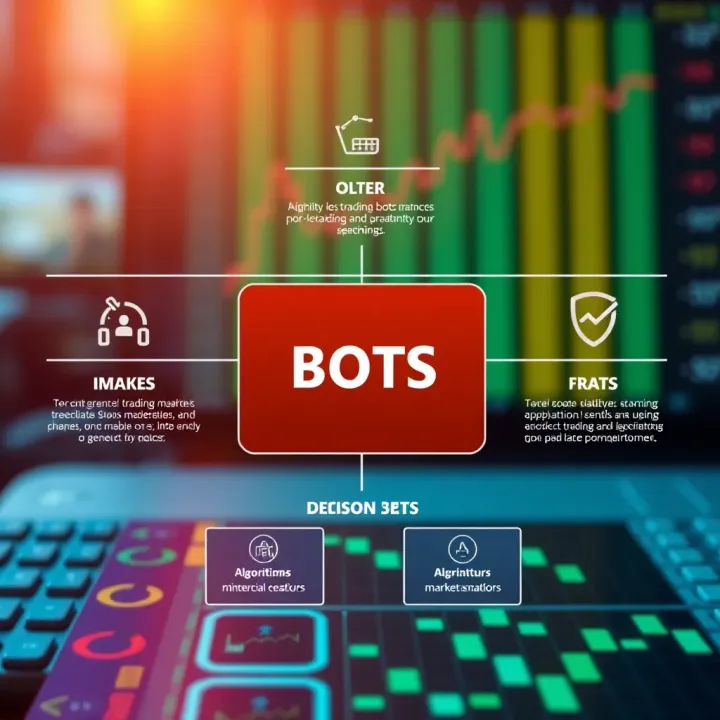
Market making bots keep the market liquid by placing simultaneous buy and sell orders around the current price. This supports smooth price changes and tighter spreads, which especially helps less liquid Nigerian stocks or crypto pairs. Traders earn the spread difference but must manage risks from price swings carefully.
Scalping bots aim to grab tiny profits many times a day, exploiting small price movements. For instance, on the Nigerian Stock Exchange, a scalper bot may execute dozens of quick trades on a stock like Dangote Cement when price fluctuations occur due to market rumours or earnings reports.
However, high-frequency trading faces barriers in Nigeria. Network delays, unreliable power supply, and less advanced infrastructure compared to international markets slow execution speed, reducing scalping effectiveness. Traders using scalping bots here must weigh costs of local internet and electricity against potential returns.
Automated strategies offer powerful tools, but their success depends on understanding local market realities and well-suited technology choices.
Optimising bot use means matching strategies to Nigerian market conditions, available data, and one's trading goals. With these practical insights, traders can better select or develop bots that truly add value rather than just hype.
Trading bots offer Nigerian traders automated solutions that operate faster and around the clock, but they come with both clear benefits and notable risks. Understanding these factors is key before relying on bots for trading in local markets.
One major advantage of trading bots is their ability to eliminate emotional bias from decision-making. Many Nigerian traders sometimes let hope or fear guide their trades, leading to impulsive buys or panic selling. Bots trade strictly by set rules and data, helping traders stick to strategies without second-guessing due to market rumours or hype.
For example, during volatile periods like the ember months when market jitters rise, bots can maintain disciplined trades while human traders might react hastily. This reduces mistakes caused by greed or panic.
Most Nigerian stock exchanges like the NSE operate during fixed daytime hours, but cryptocurrency and forex markets run non-stop globally. Trading bots fill this gap by working continuously, scanning for opportunities even when traders are offline.
This is especially helpful when local traders sleep or attend to daily activities but want exposure to global markets. Bots integrated with platforms like Binance or Binance P2P allow Nigerians to execute trades overnight, capturing opportunities missed during regular hours.
With fintech firms such as Paystack, Flutterwave, and OPay expanding, integrating trading bots has become more accessible for Nigerian investors. Many local apps now offer bot services or API access to popular exchanges.
This lowers technical barriers that previously made algorithmic trading exclusive to professionals. Individual traders in Lagos or Aba can now explore automated trading with a few taps, helping to level the playing field locally.
Technical glitches or poor programming can lead to significant financial losses. For instance, a bot might misread sudden data spikes or suffer connectivity issues during unstable Nigerian internet sessions, causing unintended trades.
Also, not all bots handle rapid price changes well, leading to losses if risk limits are not properly set. Traders should always monitor automated trades closely.
Nigerian markets often react sharply to political developments or policy announcements. Bots relying on historical data or preset rules can struggle with unexpected shocks like central bank interventions or election results.
Such events may outpace a bot’s algorithms, creating risks of rapid losses or missed chances to cut losses. Human oversight remains necessary to navigate these surprises.
The rise of trading bots in Nigeria has attracted scams promising unrealistic returns with unproven or fake bots. Many low-quality bots lack transparent algorithms or adequate security.
Investors should carefully research bot providers and avoid platforms without clear track records or regulatory backing. A flashy website alone is no guarantee of reliability.
Automated trading can simplify market entry for Nigerian traders but requires careful due diligence to navigate risks effectively.
Evaluating both advantages and limitations helps traders make informed decisions on whether and how to incorporate trading bots into their strategies.
Navigating the regulatory and ethical landscape is essential for Nigerian traders using automated trading bots. Understanding the local rules and maintaining fair practices not only safeguards your investments but also strengthens the overall market integrity. This section breaks down the roles of key regulators and the ethical standards that traders and platforms must uphold.
The Securities and Exchange Commission (SEC) Nigeria and the Central Bank of Nigeria (CBN) play central roles in overseeing automated trading activities. SEC Nigeria regulates capital market operations including securities trading, ensuring brokers and trading platforms operate within set legal frameworks. Meanwhile, the CBN supervises financial systems landscape focusing on banking, payments, and currency stability, which indirectly affects trading bot operations in forex and crypto markets.
For example, SEC Nigeria requires brokers offering automated trading to register and comply with strict guidelines to protect investors. Similarly, CBN’s policies, such as limits on foreign exchange access and anti-money laundering directives, impact bot activities, especially where crypto exchanges are involved. Staying within these regulatory boundaries helps traders avoid penalties and protects them from scams prevalent in the local fintech space.
Compliance requirements compel brokers and trading platforms to maintain transparent records, implement proper risk disclosures, and meet technical security standards. Nigerian brokers must secure licences from SEC and demonstrate the reliability of their automated services. This includes clear communication about how trading bots operate, fees involved, and potential risks.
Platforms are often mandated to implement safeguards like KYC (Know Your Customer) procedures and continuous monitoring of automated trades for suspicious activity. These measures help filter out fraudulent bots and unethical trading, providing traders a safer environment to deploy their strategies.
Fair trading practices mean that automated bots should not exploit loopholes or create unfair advantages over other market participants. Nigerian traders are expected to use bots to enhance efficiency, not to manipulate prices or distort market signals. For instance, bots shouldn’t be programmed to engage in wash trading—a practice where the same party trades with themselves to create artificial market activity, which is illegal.
Preventing market manipulation is a priority regulatorily and ethically. Bots designed to execute flash trades or spoof orders to mislead others about price trends fall foul of SEC guidelines. Nigerian authorities have increased surveillance to quickly detect and sanction such behaviour, protecting genuine investors from manipulated market swings.
Data privacy and security come to the forefront as more traders connect bots to multiple accounts and platforms. Traders must ensure that bots only access necessary data and that platform providers follow Nigerian data protection laws to prevent leaks or breaches.
For example, sharing your Bank Verification Number (BVN) or wallet credentials with unreliable bots can lead to theft or identity compromise. Therefore, selecting bots from reputable providers with robust encryption and clear privacy policies is non-negotiable in mitigating cyber risks.
Understanding and complying with Nigeria’s regulatory and ethical standards empowers traders to confidently integrate bots into their portfolios while safeguarding their interests and the health of the local markets.
In summary, Nigerian traders should stay informed about SEC and CBN rules, choose compliant platforms, promote fair use of bots, and prioritise data security. This approach not only helps to avoid costly pitfalls but also contributes to a more mature and trustworthy trading environment in Nigeria.
Trading bots can offer solid advantages in the fast-moving Nigerian markets, but knowing how to use them properly is key. Practical tips help traders avoid common pitfalls and maximise gains. These pointers cover choosing dependable bots, managing risks, and blending automation with human insight for better results.
Assessing reliability and reputation
Before committing your funds, check how trustworthy a bot is. Research platforms like Nairametrics or TechCabal often provide user reviews and industry feedback on popular bots. A bot with a strong track record, transparent development team, and active community reduces the chances of theft or technical failure. For instance, OPay’s investment platform features vetted automated strategies, giving Nigerians confidence that their money isn’t at risk.
Evaluating compatibility with preferred exchanges
A bot might be great, but if it doesn’t support your chosen Nigerian or international exchange, you’re stuck. Many Nigerian traders use platforms like Binance Nigeria, Luno, or Quidax, so ensure the bot integrates smoothly via API. Compatibility affects execution speed and order accuracy, which is critical in volatile markets where milliseconds matter. Always confirm that the bot supports the asset classes and trading pairs relevant to your portfolio.
Setting stop-loss and take-profit limits
Automated trading removes emotion but not risk. Setting firm stop-loss limits guards against heavy losses when markets swing unexpectedly, while take-profit targets lock in gains without needing constant monitoring. For example, a trader using a bot on forex pairs might set a stop-loss at 1% below entry and a take-profit at 2% above to balance risk and reward. This way, the bot handles routine exits, sparing the trader from round-the-clock watch.
Regularly reviewing bot performance
Even the best bots can underperform amid changing market conditions or technical glitches. Regular checks—say weekly or monthly—keep you alert and ready to tweak settings or switch strategies. A trader using a bot on the NGX shares should analyse trade logs, profitability, and drawdowns to ensure consistent results. Ignoring performance might let losses pile up unnoticed.
Using bots to complement human strategies
Bots excel at fast trades and pattern recognition but lack contextual judgement over news or sudden local events. Skilled Nigerian traders often use bots for routine trades and combine this with manual interventions during major announcements—like CBN policy changes or NGX market swings. This hybrid approach balances speed and insight, improving overall portfolio management.
When to intervene or pause automated trading
Markets can behave unpredictably, especially during ember months or political events. It’s advisable to pause automated trading if rapid volatility or technical faults appear. For example, if there is a sudden naira devaluation or power outage affecting internet stability, a trader should halt the bot to prevent unintended trades. Staying alert and knowing when to step in ensures the bot doesn’t turn rogue and cause avoidable losses.
Smart trading means combining reliable bots with good monitoring and clear risk limits. That balance helps Nigerian traders ride market waves confidently, not blindly.
By applying these practical tips, Nigerian traders can better harness trading bots to improve trading efficiency while managing inherent risks effectively.
🤖 Discover how AI trading bots operate in financial markets, their pros and cons, and essential tips for Nigerian traders to use them wisely in global trading.
🤖 Dive into how automated trading bots work, their impact on markets, plus tips on choosing the right one, avoiding risks, and legal guidelines.
📊 Understand the Volatility Index: what it measures, calculation, market impact, trader tips, and key factors shaping financial markets in Nigeria and beyond.

🤖 Explore how binary bots work in trading! Get safe tips, tech insights & learn pros and cons to boost your Nigerian trading strategy effectively.
Based on 10 reviews