
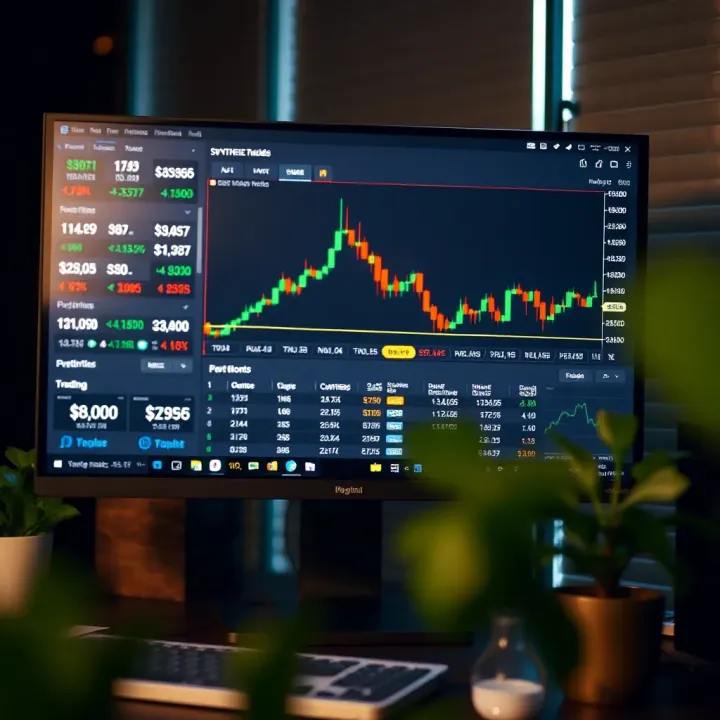
How to Trade Synthetic Indices in Nigeria
Learn how to trade synthetic indices in Nigeria 📈, explore top platforms, smart strategies, and risk tips to boost your ₦ trading game safely and confidently.
Edited By
Charlotte Dawson
Understanding synthetic indices and the role of proprietary trading firms, or prop firms, is key for Nigerian traders looking to grow their investments in this niche financial market. Synthetic indices mimic real market movements but are generated using mathematical models and algorithms. This makes them available for trading 24/7, unlike traditional indices affected by market hours and news events.
In Nigeria, where many traders face challenges like limited access to international markets and frequent power outages, synthetic indices provide an alternative with consistent availability. Prop firms specialising in these assets offer funded trading accounts, allowing traders to leverage capital beyond their own funds while sharing profits with the firm.

Yet, not every prop firm suits every trader. Choosing the right one requires careful consideration of several factors:
Funding model and profit split: Understand how much capital the firm offers and what percentage of profits you keep.
Trading conditions: Look for firms with reasonable leverage, low spreads, and flexible trading rules.
Reputation and transparency: Research firms with positive reviews and clear terms to avoid scammers or hidden fees.
Support and training: Access to educational resources and responsive customer service can greatly boost your trading success.
Selecting a prop firm without thorough research can quickly erode your capital. Take time to evaluate each option against your trading style and goals.
The Nigerian market is developing rapidly, with more prop firms entering the space to support retail traders. Grasping the mechanics of synthetic indices and how prop firms function will empower you to navigate this growing arena with confidence.
Next, we'll explore common forms of synthetic indices popular in Nigerian trading circles and why they attract traders despite the challenges of local market conditions.
Understanding synthetic indices is key for traders looking to engage the Nigerian market effectively. These financial instruments replicate market movements but do so through algorithm-generated data rather than real-world events. Knowing their nature helps traders assess the risks and opportunities before diving in.
Synthetic indices are artificially created financial instruments designed to mimic how real markets move. Unlike shares or forex pairs, their price movements do not depend on actual economic events but are generated using complex algorithms that simulate market behaviour. For example, synthetic volatility indices emulate fluctuations you might see in currencies or commodities but on a computer-driven scale.
This unique characteristic means their patterns are consistent, unaffected by political or economic surprises. Traders benefit because these indices run 24/7, providing constant opportunities. However, since they are algorithm-driven, predictable spikes or drops happen at set intervals, which savvy traders can identify and plan around.
Synthetic indices differ from regular financial instruments in that they do not reflect actual assets or commodities. While typical stocks or forex pairs fluctuate due to supply-demand, news, or economic data releases, synthetic indices rely on predefined randomisation functions to create price action.
This distinction matters for risk management; for instance, you won’t be caught off guard by unexpected news shocks with synthetic indices. Yet, it also means price trends follow formulaic cycles, which some traders find advantageous for strategy planning.
One big appeal is the market availability 24/7. Nigerian traders often face restrictions owing to international markets’ opening hours. Synthetic indices trade continuously, allowing flexibility around Nigeria’s work, worship, and family schedules. For example, a trader could open positions late at night or on Sundays without waiting for traditional market sessions.
The volatility of synthetic indices also attracts Nigerians aiming for quick profits. These markets tend to have sharp movements within short periods. While risky, this volatility provides chances for significant returns if traders manage their timing well. Consider a volatility index that spikes every hour; a trader aware of this pattern can capitalise on these bursts.
Lastly, synthetic indices fit a range of trading strategies. Whether you prefer scalping, day trading, or swing trading, their consistent and predictable oscillations offer versatile opportunities. Unlike real markets prone to sudden economic events, synthetic indices' engineered cycles support both automated systems and manual tactics effectively.
Learning how synthetic indices behave and what draws Nigerian traders to them puts you ahead when choosing a prop firm. You’ll better understand what to expect and how firms support your trading efforts.
In summary:
Synthetic indices are algorithm-based instruments mimicking real market volatility
They differ from regular markets by offering non-stop trading unaffected by economic news
Their 24/7 access, predictable volatility, and adaptability appeal strongly to Nigerian traders
Grasping these points sets a solid foundation for evaluating prop firms specialising in synthetic indices trading.
Understanding how proprietary trading firms (prop firms) fit into synthetic indices trading is vital for Nigerian traders aiming to gain a foothold in this growing market. Prop firms play a crucial role by providing capital, risk management frameworks, and training, therefore lowering entry barriers for individual traders. This support can transform a small retail trader into someone managing much larger funds, with better chances of success and profitability.

A proprietary trading firm is a company that employs traders to trade financial markets using the firm's own capital instead of the trader's personal funds. Unlike brokers who merely provide platforms for trading, prop firms take the risk themselves but expect skilled traders to generate profits. This model allows traders, especially those without large capital, to access markets more effectively.
In practical terms, prop firms finance traders’ accounts and share in the profits. If you, for example, join a prop firm focused on synthetic indices, you get access to sizeable trading capital that you wouldn’t normally have on your own. This means Nigeria-based traders can scale up their trades beyond their personal saving levels, increasing potential returns without risking all their own money.
Prop firms boost traders by providing accounts with higher capital than typical retail accounts. This means your trades can carry greater weight, amplifying possible profits. For instance, a trader from Lagos with a personal trading budget of ₦100,000 could get access to ₦1 million or more through a prop firm, unlocking opportunities that would otherwise be beyond reach.
Proper risk management is central to prop firms. They set rules to protect their capital and ensure disciplined trading, such as daily loss limits or maximum positions per trade. Nigerian traders must comply with these to stay funded. In return, profits are split—typical arrangements might see traders retain 70-80% of gains, with the firm taking the rest. This split motivates traders to perform well while keeping the firm’s exposure under control.
Prop firms do not just hand you money; they provide a structure where risk is controlled, and profits are shared transparently to ensure mutual success.
Many prop firms offer training resources tailored to synthetic indices. These range from video courses to live coaching and market analysis tools. This is invaluable for Nigerian traders new to synthetic indices, which behave differently from stocks or forex markets. Access to customised software or platforms with advanced charting and analytics can make a big difference, sharpening your strategies for the unique volatility patterns of indices.
In summary, proprietary firms open doors to more substantial funding, enforce safety nets via risk controls, and equip traders with knowledge and tech. This combined support is what makes trading synthetic indices feasible and potentially rewarding, especially in the Nigerian context where personal trading capital can be limited.
Selecting the right proprietary trading firm is critical for success in trading synthetic indices. The choice impacts your capital access, risk level, profits, and overall trading experience. Nigerian traders should weigh specific factors carefully to avoid costly mistakes and ensure a smooth partnership. Below, we break down the key elements to watch out for when choosing a prop firm.
Checking reviews and testimonials is a straightforward but effective way to gauge a prop firm's reliability. Traders often share their experiences across forums, social media, and review sites. For instance, a firm with repeated complaints about payment delays or unfair challenges should raise red flags. Conversely, positive testimonials about transparent profit withdrawals and good support suggest a firm worth considering. In the Nigerian context, feedback from local traders can be particularly insightful because it reflects challenges unique to our market, such as internet stability and currency exchange issues.
Verifying regulatory status goes beyond reputation, providing legal assurance. While some prop firms operate without direct regulation, those registered with recognised bodies offer more protection. For example, firms authorised by the Financial Conduct Authority (FCA) in the UK or the Cyprus Securities and Exchange Commission (CySEC) show a commitment to compliance. For Nigerian traders, checking whether the firm aligns with Nigeria's Securities and Exchange Commission (SEC) guidelines can also be helpful. Regulatory oversight reduces risks of fraud, ensuring funds and data security.
Leverage and margin requirements dictate how much capital you can control relative to your own funds. Prop firms offering high leverage (for example, 1:100 or more) enable traders to maximise gains on synthetic indices but also raise risk. Nigerian traders should understand that while high leverage can boost profits, it can also wipe out accounts quickly during volatile swings common in synthetic indices. Careful margin management and starting with moderate leverage can prevent premature account closure.
Day-to-day trading restrictions vary significantly between prop firms. Some impose rules on trading hours, allowed trading instruments, or maximum daily losses. For example, a prop firm might bar trading during major economic data releases or limit how many trades you can open simultaneously. Understanding and respecting these rules is crucial to avoid penalties or disqualification. Nigerian traders should ask for clear documentation on restrictions before committing, as these rules directly affect trading flexibility and strategy execution.
Commission structure determines how much you keep from your earnings. Many prop firms use a profit split, commonly ranging from 50% to 80% in favour of the trader. It's advisable to compare these ratios alongside other costs. For instance, a firm offering 70% profit share but charging hefty monthly fees might be less attractive than one with a 60% share but lower fees. Clarity on commissions helps traders plan realistic income expectations.
Refundable and non-refundable fees are often overlooked but critical. Many prop firms charge upfront fees for evaluation challenges or account access. Some of these fees are refundable upon meeting certain targets; others are not. For Nigerian traders, paying non-refundable fees without fully understanding the terms can mean unnecessary losses. It's best to ask if fees cover actual services like data feeds, platform usage, or training, and confirm refund policies in writing.
Choosing the right prop firm is not just about flashy offers; it's about understanding the fine print, trader protections, and how conditions align with your style and goals. Taking time to vet firms today prevents headaches tomorrow.
By focusing on these key factors — reputation, trading conditions, and profit-sharing terms — Nigerian traders can make informed decisions and increase their chances of trading synthetic indices profitably with prop firms.
Joining a proprietary trading firm (prop firm) to trade synthetic indices is a process that demands careful attention. This step is crucial because it sets the foundation for your trading journey with the firm and can influence your chances of success. Understanding how to navigate the application, evaluation, and onboarding phases will help you enter the prop trading world more confidently and avoid common pitfalls.
Passing demo or trial challenges is often the first hurdle. Many prop firms require traders to demonstrate their skills on demo accounts before granting access to live funds. This trial runs simulate real trading conditions without risking actual money. For example, you might have to achieve a specific profit target or maintain a defined risk level in a week. Passing these challenges shows the firm that you understand the behaviour of synthetic indices and possess necessary discipline.
These demo trials are not just rubber stamps. Firms use them to evaluate if your strategy aligns with their risk parameters. If you fail repeatedly, it might indicate your approach needs refinement or that you lack consistency, which can be expensive on live accounts. Consequently, Kenyan and Nigerian traders taking prop challenges often practise extensively on platforms like Deriv’s demo accounts before attempting prop trials.
Meeting minimum trading standards comes after passing the demo phase. Many firms require traders to adhere to certain performance benchmarks—like maximum daily drawdown limits, minimum trading volume, or specific win rates. Maintaining these standards is practical because it protects the firm’s capital and ensures disciplined trading.
For instance, a firm might restrict trades to a maximum loss of 2% per day or set limits on maximum position sizes. Failing to meet these standards can lead to account suspension or termination. Nigerian traders must study these conditions carefully to avoid misunderstandings, especially since some rules can appear strict but are vital for long-term profitability and risk control.
Account setup and funding marks the transition from evaluation to live trading. After successfully passing assessments, the firm usually sets up a funded trading account under your name or an alias. This account combines your trading capital and the firm’s backing, allowing you to trade larger volumes than your personal funds would permit.
In Nigeria, funding often involves deposits through bank transfers or payment platforms like Paystack or Flutterwave for any initial fees or profit withdrawals. Ensuring secure payment channels is essential to avoid scams. Also, some firms may require a refundable deposit as a security measure, so it’s important to clarify such fees before committing.
Access to trading platforms and resources follows account approval. Prop firms typically provide licensed trading platforms, like MetaTrader 5 or proprietary software tailored for synthetic indices trading. These platforms offer tools such as real-time charts, custom indicators, and risk management features that support effective trading.
Besides software access, firms might offer educational resources, webinars, and community forums. These support systems help Nigerian traders familiarise themselves with market behaviour and sharpen strategies. Joining community forums can be especially advantageous, giving you insights from fellow traders’ experiences and sometimes early warnings on market movements.
Joining a prop firm involves clear steps with defined expectations. Taking time to understand and meet these requirements increases your chances of success while protecting your integrity as a trader.
In summary, the process to join a prop firm for trading synthetic indices in Nigeria involves passing realistic demo challenges, strictly observing trading rules, setting up a funded account securely, and utilising provided platforms and resources. Approaching these steps with thorough preparation reduces costly mistakes and builds a solid foundation for thriving in this dynamic market.
Successful trading with prop firms demands more than just capital from the firm; it requires a solid strategy and careful use of resources. For Nigerian traders diving into synthetic indices, understanding practical steps to maximise opportunities while managing risks ensures you don’t just survive but thrive.
Understanding index behaviour is crucial for trading synthetic indices. These indices mimic real-market movements but operate continuously, even outside regular market hours. Knowing patterns such as volatility spikes during certain hours or how news events might influence synthetic index trends helps tailor your trades. For example, a trader who notices increased price swings on the synthetic volatility 100 index in the late evening WAT can plan to enter trades with tighter stop-losses or use shorter timeframes to capture quick moves.
Equally, knowing that synthetic indices aren’t tied to physical assets means traditional fundamental analysis may hold less sway compared to technical analysis. Leveraging charts and indicators becomes vital. Nigerian traders who familiarise themselves with price action and volume behaviours on platforms like Deriv or Binary.com find an edge.
Risk management approaches separate consistent traders from those who burn out. Prop firms expect you to protect the capital they provide, so setting strict stop losses and managing position sizes is key. For instance, a rule of risking no more than 1–2% of your allocated capital per trade reduces the chance of large drawdowns.
Moreover, employing daily loss limits prevents emotional trading after losses, a common pitfall. Nigerian traders often connect this with the cultural value placed on discipline and restraint—qualities that serve well in trading. Having a clear exit plan alongside entry points also shields the account from unnecessary exposure.
Using training materials provided by prop firms is a practical way to sharpen your skills. Many firms offer video tutorials, webinars, and written guides tailored to synthetic indices. These materials often cover trading platform features, risk assessment techniques, and strategy optimisation.
Attempting to learn casually or skipping training wastes valuable opportunities. For example, accessing pre-recorded sessions on maintaining trading discipline or indicators specific to synthetic instruments makes you more prepared. A Nigerian trader who used these resources reports better discipline and improved profit margins within months.
Joining community forums builds a network for knowledge exchange and moral support. Prop firm communities, social media groups, or specialised trading forums are where you can share experiences, discuss strategies, and learn about market anomalies or prop firm news.
Active participation exposes you to diverse perspectives and real-time advice. For example, peers might alert you to temporary changes in trading conditions by a prop firm or offer insights on new synthetic indices. Nigerian traders often find such communities help reduce isolation and speed learning curves, making these forums as valuable as formal training.
Successful trading with prop firms depends on consistent strategy, disciplined risk management, and making full use of available support. Neglecting any of these can lead to missed profit or account suspension.
By putting these tips into practice, Nigerian traders stand a better chance to build durable trading careers with prop firms and maximise returns from synthetic indices trading.
Learn how to trade synthetic indices in Nigeria 📈, explore top platforms, smart strategies, and risk tips to boost your ₦ trading game safely and confidently.

Find out how to pick the best broker for your investments in Nigeria 🇳🇬. Learn what matters most in brokers and get practical tips for local & global markets.

🔍 Choosing the best broker in Nigeria? Discover how to pick the right one with tips on fees, platforms, asset variety & solid support for smooth trading.

🌍 Discover how to choose the best forex broker in Nigeria! Learn about regulations, trading costs, platform options & support to trade confidently.
Based on 14 reviews