
Binary Trading Apps in Nigeria: A Practical Guide
📱Explore the essentials of binary trading apps in Nigeria: features, risks, local rules, payment methods, and tips for choosing apps wisely.
Edited By
Amelia Turner
Forex binary trading has gained traction among Nigerian traders as a straightforward way to tap into the foreign exchange (forex) market. Unlike traditional forex trading, which involves buying and selling currency pairs with variable profits or losses, binary trading offers a fixed return based on a simple yes/no proposition — will a currency pair rise above or fall below a certain price within a set timeframe?
Many Nigerians are drawn to forex binary trading for its simplicity and fast turnaround. For example, you might predict whether the USD/NGN exchange rate will be higher or lower in the next 30 minutes. If right, you earn a predetermined payout; if wrong, you lose your stake. This binary outcome limits potential gains but also caps losses, making it attractive for those who prefer clear risk boundaries.
However, it’s essential to understand that forex binary trading carries significant risks. The market is volatile, especially for naira pairs affected by currency controls, import demands, and external shocks. Many platforms operate without proper regulation in Nigeria, increasing the danger of scams and fund mismanagement.
Understanding the difference between binary and traditional forex trading clarifies the approach Nigerian traders should adopt:
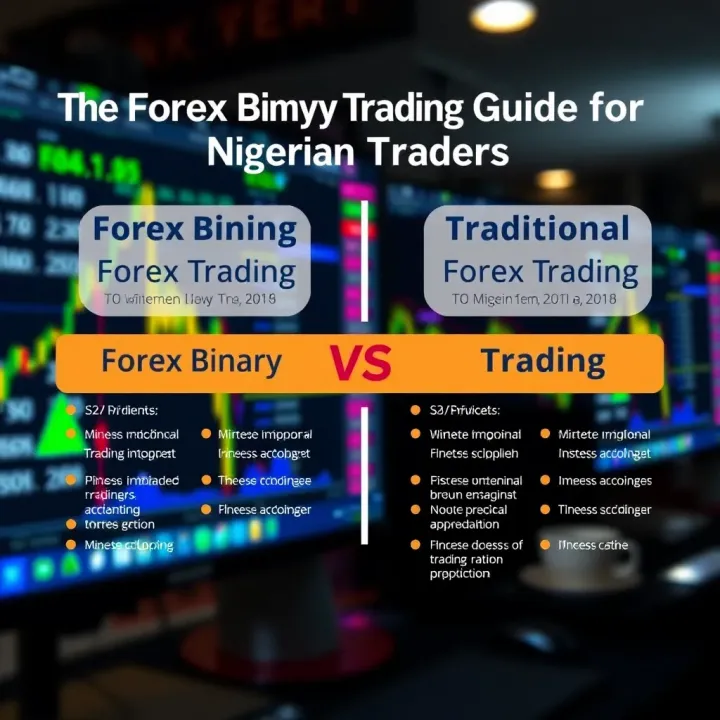
Binary trading: Fixed risk and reward based on a yes/no question. Trades last from a minute to several hours.
Traditional forex: Variable profit or loss depending on market swings. Positions can be held from seconds to months.
To protect your ₦, only deal with platforms that follow Nigerian financial regulations or are internationally recognised. Keep informed about CBN guidelines on forex activities and use tools like Bank Verification Number (BVN) to secure your transactions.
Forex binary trading can be a useful tool when you understand its mechanics and risks. Treat it as a short-term, speculative activity rather than a stable income source.
In the coming sections, we will explore practical strategies to trade binaries effectively, discuss regulatory issues Nigerian traders face, and suggest ways to safeguard your funds in this fast-growing but challenging market.
Diving into forex binary trading begins with understanding what it entails and why it draws many Nigerian traders’ attention. This section unboxes the basics, helping you grasp the core concepts before venturing into more complex trading strategies.
Forex binary trading is a financial arrangement where traders predict the price direction of currency pairs within a fixed timeframe. Unlike traditional forex trading, which involves buying or selling currency pairs, binary trading boils down to a simple yes-or-no proposition: will the price rise or fall at expiry? If your prediction is correct, you earn a fixed payout, typically between 70% to 90% of your investment. If wrong, you lose the capital staked.
For example, if you invest ₦10,000 predicting the USD/NGN pair will rise in the next 30 minutes, and it indeed rises, you might make around ₦8,000 profit. If the price falls, your ₦10,000 is lost. This straightforward method appeals to traders looking for clear-cut outcomes without complex calculations.
Compared to standard forex trading, binary trading strips away the complexity of pip movements, margin, and leverage. Traditional forex requires understanding of market swings and often involves holding positions longer, with profits or losses tied to the extent of price change. Binary trading differs by fixing potential returns and risks upfront – making it more akin to betting on a direction rather than owning currency.
This simplicity can attract novice traders or those with limited time, but it also means the opportunity is all or nothing, unlike the nuanced gains possible in spot forex.
One big pull for Nigerians is the accessibility binary trading offers via smartphones and affordable internet packages. With mobile networks improving across Lagos, Abuja, and beyond, many can engage in trading straight from their phones or laptops. There's no need for expensive equipment or professional trading desks.
Platforms offering forex binary trading often come with user-friendly apps and straightforward interfaces. For instance, an investor in Ibadan can start trading after downloading an app, verifying identity with a Bank Verification Number (BVN), and funding their account through mobile banking or USSD.
Another key attraction lies in the fixed returns and short expiry periods typical of binary options. Trades can last from as brief as 30 seconds to an hour, allowing rapid profits without waiting days or weeks as some traditional trades require.
This suits Nigerians who want to trade around their jobs, school, or daily hustles without getting locked into long positions. The predictable profit or loss removes some guesswork common in standard forex trading, though it's worth noting that this also means the risk of losing your full stake remains high.
Remember, while binary trading promises fixed returns, it involves high risk. It’s wise to start with amounts you can afford to lose and avoid chasing losses.
Overall, this section has set the foundation, explaining what forex binary trading is, how it stands apart from conventional forex, and why it appeals to many Nigerians today. Next sections will explore how to trade, manage risks, and select reputable platforms in Nigeria’s dynamic financial market.
Understanding how forex binary trading works is vital for Nigerian traders aiming to participate confidently in this market. This method offers clear, fixed outcomes based on simple price predictions, making it easier for traders to grasp compared to standard forex trading. However, knowing the mechanics behind different binary options and the practical steps to place trades can help you make smarter choices and manage risks better.
High/low options allow you to predict whether a currency pair's price will close above or below the current level at expiry. This simplicity appeals to many beginners since the guess is straightforward: will the price rise or fall? For example, if you predict that the USD/NGN rate will be higher in 30 minutes than now, you stand to gain a fixed return if correct. This type is practical for short-term trading during market hours when currency rates show frequent movement.
Touch/no-touch options require forecasting whether the price will touch a specific level within a set time. For instance, if EUR/USD is trading at 1.1500, you might bet it will ‘touch’ 1.1550 before expiry. If it does, you win regardless of the final closing price. This provides strategies beyond simple up/down bets, letting traders target key support or resistance levels, which is handy during volatile periods.
Range options ask traders to predict whether the price stays within a predetermined range by expiry. Picture GBP/USD fluctuating between 1.3000 and 1.3100; you can wager on whether it’ll remain inside that band. This appeals in quieter market sessions or when economic news is scarce. Range options offer a way to profit when prices aren’t making big moves—common during Nigerian market off-hours.
Choosing a currency pair is your first practical decision. While popular pairs like USD/NGN, EUR/USD, or GBP/USD have more liquidity and tighter spreads, some brokers offer exotic pairs involving African currencies. Selecting pairs you understand or follow closely—such as USD/NGN because of daily news affecting Nigeria’s naira—can improve your chances of accurate predictions.
Selecting expiry time sets when your option closes. Binary trading lets you choose very short durations (from 60 seconds) up to several hours or days. Short expiry suits fast traders looking for quick returns, but it also increases risk due to random price swings. Longer expiry periods allow more time for market factors to play out but tie up your funds. Balancing your strategy with expiry times is crucial.
Setting the investment amount depends on your risk appetite and capital availability. Since binary trading can result in total loss of your stake, many Nigerian traders start small—say ₦500 or ₦1,000 per trade—while learning. As you gain experience, you might allocate higher amounts. Most brokers also allow setting a maximum loss limit to protect your wallet.
Predicting price direction is the core challenge. Accurate decisions often combine technical analysis, news on monetary policy or economic events, and understanding of market sentiment. For example, a trader might predict naira depreciation if CBN announces tighter forex controls. Being disciplined and avoiding impulse bets based purely on guesswork improves long-term results.
Successful forex binary trading rests on clear understanding of trade types and careful decision-making throughout steps from pair selection to expiry time. This practical grasp helps Nigerian traders balance opportunity and risk in a fast-moving environment.
Understanding the risks involved in forex binary trading is vital for Nigerian traders who want to navigate the market without losing hard-earned money. This trading style is fast-moving and can seem straightforward, but its challenges are often underestimated. Recognising these pitfalls helps traders make informed decisions and avoid common traps.
Many binary trading platforms operating in Nigeria are not licensed by the Securities and Exchange Commission (SEC) or any other recognised regulatory body. This lack of oversight means traders face significant risks when dealing with such platforms. Scams have become frequent, where traders deposit funds only to find withdrawals blocked or accounts suddenly closed. For instance, some brokers disappear overnight, leaving clients stranded without support or recourse.
This situation means Nigerian traders must carefully vet brokers, checking for valid licences and transparent operations before committing funds. Without regulation, there's little consumer protection, increasing the chances of falling victim to fraudulent schemes.
Forex binary trading’s all-or-nothing nature means you can lose your entire investment quickly. The fixed-return setup might look appealing, but wrong predictions wipe out all money staked on a trade. Unlike traditional forex trading where partial losses might be recovered gradually, binary trading offers no middle ground.
For example, if you invest ₦10,000 in a high/low option predicting the dollar’s rise but the price dips by even a fraction at expiry, you lose the entire ₦10,000 instantly. Many Nigerian traders get caught in this trap, especially when influenced by overconfidence or insufficient market analysis.
Currency markets are notoriously volatile, especially for pairs involving the naira, which can be affected suddenly by political events, policy changes, or global economic shifts. This volatility can work against binary traders who must predict price direction within short expiry times.
For instance, during ember months, political uncertainties and fuel scarcity often cause sharp naira fluctuations. Such unpredictable swings make binary trading riskier because traders might not anticipate sudden reversals, leading to unexpected losses.
Unlicensed brokers usually have weak or no verification from Nigerian authorities or international regulators like the Financial Conduct Authority (FCA) or Cyprus Securities and Exchange Commission (CySEC). Warning signs include:
Lack of clear physical office address and contact details
Poor website design filled with spelling errors
No clear information about company ownership
In Nigeria, where scam platforms target eager traders, ignoring these signs can be costly. Legitimate brokers openly display licences and regulatory information.
Fraudulent platforms often entice users with promises of high returns, guaranteed profits, or no risk trading. Such claims are red flags because no market investment offers guaranteed returns without risks. Sometimes, these brokers offer bonuses that look attractive but come with complicated withdrawal terms, trapping funds.
A Nigerian trader offered "risk-free" trades by a dubious broker might quickly discover locked funds or forced additional deposits. Genuine brokers clearly state risk warnings and avoid exaggerated claims.
When dealing with forex binary trading, especially in Nigeria's less regulated environment, always prioritise due diligence, avoid shortcuts, and manage expectations realistically to protect your investment.
Trading binary forex without a clear plan is like crossing Lagos traffic blindfolded — risky and likely to end badly. Employing solid strategies reduces the chance of wiping out your capital fast. Nigerian traders often face challenges like unregulated brokers and volatile markets, making well-founded strategies not just useful but necessary.
Technical analysis involves studying past price charts and market data to predict future trends. For binary forex, understanding support and resistance levels, trend lines, and candlestick patterns can guide your decisions on whether the price will rise or fall within a set time. For instance, spotting a bullish engulfing pattern on the USD/NGN pair might suggest an upward move, signalling a 'call' option.
It’s not about guessing but using historical data and patterns. Tools such as moving averages and Relative Strength Index (RSI) help you identify overbought or oversold conditions. Learning basic technical analysis reduces guesswork and helps avoid impulsive trades that often burn beginners.
Economic events and news releases can send currency prices swinging unpredictably, especially currencies like USD, EUR, or GBP that Nigerians often trade. Keeping an eye on an economic calendar for scheduled releases like Central Bank of Nigeria (CBN) policies, US Nonfarm Payrolls, or inflation data is vital.
For instance, if the CBN announces a change in monetary policy unexpectedly, this could dramatically affect the naira's strength. Trading binary options without factoring such news is risky. Nigerian traders should pause or adjust their trades around major news events to avoid sudden losses.
No matter how good your strategy, losses are inevitable. Managing your money wisely means setting strict limits on how much to risk per trade and daily. A common method is risking only 1-5% of your trading capital on a single trade.
Suppose you have ₦100,000 set aside for trading; keeping your investment per trade to ₦2,000 helps you stay longer in the game and avoid blowing your funds in a few bad trades. Setting stop-loss limits, even in binary trading, means knowing when to stop after a string of losses and not chasing losses desperately.
Picking a trustworthy broker can save you from scams that plague Nigerian forex binary markets. Choose brokers with clear regulation from well-known bodies like the International Financial Services Commission (IFSC), Financial Conduct Authority (FCA), or those complying with Nigerian SEC guidelines.
Also, review customer feedback and check how they handle complaints. Ensure the broker offers transparent terms, real-time price data, and a user-friendly platform. A broker with a good reputation provides Nigerian traders with confidence and better chances of success.
Ease of depositing and withdrawing funds can make or break your trading experience. Brokers catering to Nigerian traders often support popular local payment channels like bank transfers from GTBank or Access Bank, USSD payments, as well as digital wallets such as OPay or Flutterwave.
Withdrawal processes should be fast and straightforward, without hidden fees or delays lasting weeks. This accessibility means you can quickly access your profits and reinvest or meet other financial needs, which is especially crucial during ember months or festive seasons.
Efficient strategies combined with reliable platforms make binary forex trading less like a gamble and more like a managed venture, especially in Nigeria's complex trading environment.
Regulation in forex binary trading is crucial because it protects investors from fraudulent schemes and unscrupulous operators, which are common in Nigeria's largely unregulated online trading environment. Knowing the legal status helps you trade with confidence, ensuring your funds are safer and that you understand the boundaries within which brokers and platforms must operate.
For Nigerian traders, recognising which entities oversee forex binary trading and what rules apply is essential. Without this knowledge, you risk falling victim to scams or unlicensed brokers who may disappear with your investment. Given Nigeria's vibrant but sometimes volatile financial market, understanding the regulatory framework can save you from serious losses.
The Nigerian Securities and Exchange Commission (SEC) is the primary regulatory body governing capital markets and investment activities, including forex trading. They have a mandate to protect investors by registering, regulating, and supervising market operators and investments.
While binary options are popular among Nigerian traders, the SEC has not officially licensed any platform offering forex binary trading within the country. This absence means most binary brokers operating here do so without formal oversight by Nigerian authorities, leaving investors exposed to risks.
The SEC and other regulatory agencies warn about the high risk and frequent scams tied to binary options. They highlight that many platforms promise fixed returns but are often unregulated offshore entities that may manipulate prices or delay withdrawals.
Market volatility intensifies the risk, and the all-or-nothing nature of binary trades can wipe out investments quickly. Nigerian financial authorities have repetedly advised retail investors to exercise caution and verify the authenticity and regulatory compliance of brokers before committing funds.
Before trading, check if the broker is registered with recognised authorities such as SEC Nigeria or reputable international bodies like the Financial Conduct Authority (FCA) in the UK. Legitimate brokers will openly display their regulatory credentials and will be listed on official regulatory websites.
Avoid brokers claiming to offer huge returns without proof of licensing. Unlicensed brokers may not follow industry standards, putting your investment at significant risk.
If you suspect a broker is fraudulent or experience issues withdrawing funds, report the case immediately to SEC Nigeria or the Nigerian Financial Intelligence Unit. Prompt reporting can trigger investigations and protect others from falling victim.
Besides regulators, consumer protection groups and online forums where Nigerian traders share their experiences can provide assistance. Publicising scam patterns helps the wider community stay alert and avoid similar pitfalls.
Staying informed about regulatory updates and actively verifying broker credentials is key to safer participation in forex binary trading in Nigeria.
By understanding the regulatory landscape and acting cautiously, Nigerian traders can reduce potential losses and trade more securely in the largely unregulated forex binary market.
📱Explore the essentials of binary trading apps in Nigeria: features, risks, local rules, payment methods, and tips for choosing apps wisely.
📊 Explore binary options trading with this detailed guide! Learn the basics, platforms, strategies, risks & regulations tailored for Nigerian traders 🇳🇬

📈 Discover forex trading hours that matter for Nigerian traders 🇳🇬. Learn how local time zones, market schedules & broker timings affect your ₦ trading profits! ⏰
Discover how to choose the best trading app in Nigeria 🇳🇬 with tips on features, security, costs, and trusted platforms for smooth & safe trading 📱💹
Based on 8 reviews