
Understanding Binary Charts and Their Uses
Explore how binary charts 📊 visualize data using binary numbers. Learn their role in computing 🖥️, electronics ⚡, and data analysis 🔍 with clear examples.
Edited By
Emily Carter
Predictions about tomorrow are central to decisions in finance and trading, especially in Nigeria’s dynamic market. Whether you’re an investor watching the Nigerian Stock Exchange (NGX) or a trader dealing with forex, tomorrow’s forecasts guide your moves. Understanding the methods behind these predictions, their uses, and limitations can sharpen your strategy.
Forecasting often relies on historical data analysis, where past patterns signal probable future outcomes. For example, studying NGX All-Share Index trends helps traders anticipate market swings. On the other hand, algorithms using machine learning on vast datasets can detect subtle patterns missed by human eyes. Nigerian fintech firms like Paystack and Flutterwave increasingly utilise such tech to predict payment flows and customer behaviour.
Different methods suit various sectors:
Technical analysis: Common in stock and forex markets, it uses price charts and volume to predict short-term movements.
Fundamental analysis: Focused more on company performance or macro factors like CBN’s monetary policies that affect interest rates and currency stability.
Quantitative models: Statistical tools that forecast market risks or asset prices based on numerical data.
Reliable predictions don't guarantee outcomes but reduce uncertainty. Traders who base decisions on well-analysed forecasts rather than gut feelings often achieve better results.
However, many challenges affect prediction accuracy. Nigeria’s market is sensitive to unpredictable events—like sudden policy changes, political unrest, or fuel scarcity disrupting supply chains. These disrupt models that depend heavily on steady historical trends. Also, data quality can be a hurdle; not all information is up-to-date or accurate, impacting forecast reliability.
On top of these, the ethics of relying extensively on predictions must be considered. There’s risk in depending too much on uncertain forecasts, especially for investors without a cushion against loss or margin calls.
Understanding tomorrow’s predictions involves balancing advanced methods with local realities. Effective use of forecasts comes when traders combine multiple approaches and stay aware of the market’s unique challenges. This knowledge boosts confidence, helping you navigate risks and uncover opportunities amid Nigeria’s often volatile financial environment.
Understanding how predictions for tomorrow are made is key for traders and investors who rely on these forecasts to make timely decisions. In Nigeria’s fast-moving markets, accurate forecasts can mean the difference between profit and loss. This section focuses on the practical methods behind these forecasts, highlighting how data and expert insight blend to produce tomorrow’s projections.
Predictive accuracy starts with solid data, mainly past information. Traders studying stock price movements pay attention to historical trends—patterns like price fluctuations during ember months or market responses to CBN policy shifts. Collecting data over weeks, months, or years provides a foundation to identify recurring behaviours or anomalies relevant to future predictions.
For instance, if a certain forex pair rises consistently after economic announcements, this historical trend informs tomorrow’s currency forecasts. However, the quality and spread of historical data directly influence prediction reliability.
Statistical models transform data into forecasted outcomes by quantifying relationships within data points. Common models such as moving averages or regression analysis help analysts understand how one factor might predict another. In Nigeria's stock market, using regression could show how oil price changes affect shares in energy companies.
Models like ARIMA (AutoRegressive Integrated Moving Average) assist in predicting time series data like daily stock prices by analysing past values and patterns. Yet, the assumptions behind models limit them; sudden market shocks or policy changes can disrupt normally reliable trends.
Machine learning (ML) and artificial intelligence (AI) have become pivotal in refining predictions. These tools process large data volumes more swiftly and identify complex patterns beyond human reach. Nigerian fintech firms like Paystack use ML to anticipate customer transaction volume shifts, helping manage liquidity.
ML algorithms adapt as new data streams in, improving forecast precision. For example, AI systems can analyse social media sentiment around a company before its quarterly results, offering ahead-of-time market reaction cues. Nonetheless, ML models depend heavily on quality data and require ongoing tuning to Nigerian market specifics.
While data drives forecasts, seasoned analysts add valuable intuition. Their understanding of local market idiosyncrasies, such as how petrol scarcity impacts transportation stocks, allows them to fine-tune purely data-driven predictions. For instance, an expert might adjust forecast models when aware of impending fuel subsidy revisions affecting retail sectors.
This blend improves forecasts by catching nuances raw data might miss, especially in emergent situations where data is sparse or noisy.
Certain situations call for strong human judgment. Political events like guber elections or abrupt trade restrictions often defy data patterns. Analysts with intimate knowledge of local politics and economy can interpret such complex signals to forecast market responses better than AI alone.
Also, in Nigeria’s informal sector-driven economy, where data gaps exist, human insight remains critical. Real-time observations, like disruptions caused by okada bans or danfo strikes, feed into timely forecast adjustments that purely automated systems may overlook.
The key takeaway for traders and analysts is that tomorrow’s predictions come from a careful mix of data-driven models and seasoned human insight. Each plays a vital role in navigating uncertainties unique to Nigerian business environments.
Next-day forecasts have become indispensable across multiple sectors, helping Nigerians plan daily activities and business decisions with more certainty. From weather updates to financial market trends and even entertainment, these predictions shape how individuals and organisations prepare for what lies ahead. Each sector relies on specific tools and insights tailored to its needs, making the accuracy and timely delivery of forecasts essential.
Weather forecasting for the next day involves using satellite imagery, Doppler radar, weather stations, and computer models to analyse atmospheric data. Tools like the Nigerian Meteorological Agency’s (NiMET) digital platforms and global weather services blend real-time information with historical climate patterns. This lets forecasters provide reasonably accurate predictions on rainfall, temperature, wind speeds, and humidity, which are crucial across Nigeria’s diverse climatic zones.
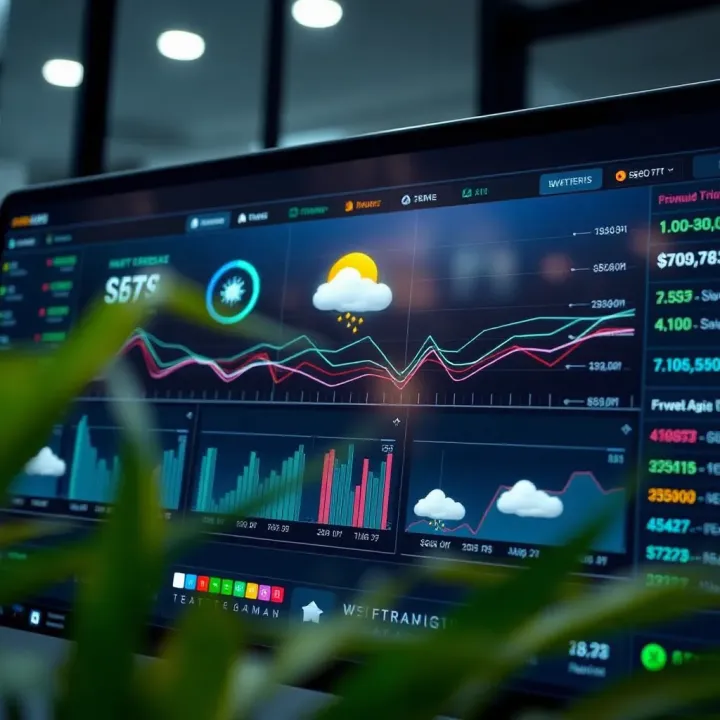
The impact of weather forecasts on Nigerians is quite direct. For farmers, knowing whether rain will come tomorrow influences planting, irrigation, or harvesting decisions, thus protecting farming investments. Lagos traders and small business owners, for instance, monitor forecasted rain to ensure stock movement ahead of possible disruptions. Even daily commuters using okadas or danfos adjust their travel plans based on weather predictions to avoid heavy traffic or hazardous road conditions. Businesses linked to outdoor activities, such as event planners and construction companies, also rely heavily on accurate weather data to prevent losses due to sudden weather changes.
Stock and currency markets in Nigeria are influenced by various factors, including international commodity prices, political events, and economic indicators. Next-day financial forecasts use quantitative models analysing yesterday’s closing prices, volume, geopolitical news, and economic releases like Central Bank of Nigeria (CBN) policy updates. This helps investors anticipate likely market movements in equities, the naira (₦) exchange rate, and fixed-income instruments.
Traders use tomorrow’s predictions to inform buy or sell decisions, aiming to maximise returns and minimise risks. For example, a forex trader in Lagos might monitor overnight developments in oil prices before making decisions early in the Nigerian trading day. Brokers on the Nigerian Stock Exchange (NGX) leverage algorithms generated from market data to predict stock momentum, aiding portfolio adjustments. These forecasts guide strategies around short-term trades, margin calls, and risk hedging in volatile markets.
In sports, predicting match results and audience behaviour involves analysing player form, injury reports, past team performances, and even fan sentiment on social media. Betting companies in Nigeria use sophisticated algorithms to set odds, factoring in these next-day predictions for football leagues, boxing matches, or basketball tournaments. Event promoters also study audience turnout forecasts to manage ticket sales and logistics effectively.
Betting remains a significant sector where next-day forecasts come handy, allowing individuals and companies to strategise their wagers based on likely outcomes. Similarly, event planners in cities like Abuja or Port Harcourt use such predictions to anticipate crowd sizes, weather impacts, or transportation demands, ensuring smooth execution during concerts, political rallies, or cultural festivals. These practical uses illuminate how forecasting shapes entertainment and sports ecosystems in Nigeria, balancing risk and opportunity.
Accurate next-day predictions empower Nigerians across sectors to make informed, timely decisions, ultimately reducing surprises and enhancing economic activities in daily life.
Predicting what will happen tomorrow depends heavily on certain factors that can either boost or weaken the reliability of forecasts. For traders, investors, and finance analysts, understanding these factors is not just academic—it’s practical. It helps guard against poor decisions based on faulty expectations and sharpens how to interpret predictions, whether from AI-driven systems or expert advice.
Data forms the backbone of any prediction model. The limitations in data availability can seriously impact forecast accuracy. For example, if you’re analysing stock market trends on the Nigerian Stock Exchange (NGX), a lack of real-time data or delays in reporting corporate earnings can distort the outlook. Similarly, financial models relying on historical exchange rates of the naira may miss sudden government policy changes if recent data are scarce. In such cases, incomplete data creates gaps that the model fills with assumptions, increasing the risk of errors.
Another challenge stems from the influence of data noise and bias. Noise refers to random fluctuations that don’t reflect the actual trend but appear in data, such as sudden price spikes caused by uninformed trades or panic selling. Bias occurs when the data collected is unrepresentative of the broader trend, for instance, if a financial model overrelies on data from a few large banks while ignoring smaller institutions. These issues can mislead algorithms or analysts, producing overconfident or skewed predictions. Traders who fail to account for noise may react to false signals, resulting in losses.
No prediction exists in a vacuum. Unexpected events and shocks can throw even the most reliable models off course. Consider how Nigeria’s petrol subsidy adjustments or fuel scarcity can alter market behaviour overnight. Such shocks can make previous patterns useless, as businesses scramble to adjust to sudden cost increases or supply chain disruptions.
Besides natural disasters or policy changes, human behaviour plays a big role in shifting predictions. For Nigerian markets, investor sentiment can sway rapidly after political announcements or during election periods, triggering moves that defy prior data trends. Sometimes, crowd psychology leads to herd behaviour, causing market bubbles or crashes unexpected by statistical models. Recognising that human decisions inject volatility and unpredictability is what separates good forecasters from guessers.
When interpreting tomorrow’s forecasts, always ask: How reliable is the data, and what external surprises could upend current trends? These questions help balance optimism with caution.
Understanding these factors enables finance professionals to better navigate the complex uncertainty in tomorrow's predictions. They can then make risk-informed choices instead of blindly trusting any forecast.
When it comes to tomorrow's predictions, understanding their reliability is key for traders, investors, and finance analysts. Accurate forecasts often provide a competitive edge, helping you anticipate market fluctuations or weather conditions that affect business operations. However, it’s essential to recognise that not all predictions hit the mark equally, especially in a dynamic environment like Nigeria’s, where sudden policy shifts or unexpected events can easily disrupt forecasts.
The Nigerian Meteorological Agency (NiMet) has notably improved its forecast accuracy over the years. For instance, NiMet's daily weather predictions, especially regarding rainfall patterns in Lagos and Abuja, have seen increased reliability during the rainy season. This progress helps local farmers plan their planting schedules and traders allocate logistics resources more efficiently. Still, NiMet itself acknowledges limitations due to Nigeria’s diverse microclimates and erratic weather systems.
It’s common for NiMet to issue a 24-hour forecast with about 70-80% accuracy, which suffices for basic day-to-day planning. This level of precision matters for agricultural markets where even slight changes in rainfall can affect crop yield and pricing.
In Nigeria’s financial sector, platforms like Nairametrics and InvestData provide forecasts based on historical data and current trends. These services combine technical analysis, market sentiment, and global economic indicators. For example, forecasting naira exchange rates against the dollar involves monitoring Central Bank of Nigeria (CBN) interventions, crude oil prices, and foreign investment flows.
While some financial models predict the Next-Day NGX market movements with reasonable accuracy, the forecast success varies due to the market’s liquidity and external shocks. Savvy investors often use these predictions as one of several tools, integrating them with real-time news and macroeconomic data to make balanced decisions.
Insufficient or poor-quality data often leads to inaccurate predictions. For example, limited access to real-time economic statistics or incomplete market data can skew financial forecasts. Weather predictions face similar issues when sensor coverage gaps or delays in data updating happen, leading to errors.
Furthermore, unexpected events such as fuel shortages affecting transport, sudden regulatory changes by the CBN, or an unexpected political announcement can quickly render a forecast obsolete. In Nigeria’s highly entrepreneurial environment, where informal sector activities thrive, unpredictable human behaviour adds another layer of uncertainty.
Relying too much on forecasts without accounting for their limitations may mislead you. For instance, traders might rush into stock positions based solely on a projected market rise, ignoring ongoing political tensions or currency depreciation risks not reflected in models. Similarly, farmers ignoring sporadic rain predictions might over-invest in planting, risking losses if the forecast fails.
Always treat predictions as guidance—not absolute truth. Combining multiple sources and staying alert to changes helps you avoid costly decisions based solely on forecast outcomes.
In sum, while tomorrow’s predictions hold practical value, their reliability depends on data quality, external factors, and prudent use. For Nigerian traders and investors, blending forecasts with experienced judgement and flexibility is the best approach to navigate uncertainties and seize opportunities.
Applying tomorrow’s forecasts effectively can make a real difference in decision-making, especially for traders, investors, and finance analysts who operate in Nigeria's dynamic environment. These predictions often shape strategies, resource allocation, and risk management. Knowing how to interpret forecasts and balancing possible risks with opportunities is key to staying ahead.
Confidence levels indicate the probability that a certain prediction will be accurate. For example, a weather forecast showing a 70% chance of rain means there’s a significant probability, but not a guarantee, that rain will occur. Similarly, financial predictions come with confidence intervals that help investors gauge the risk. Recognising these levels helps traders avoid overcommitting based on forecasts that are less certain.
In practice, understanding confidence levels means not treating forecasts as absolutes but as guides that point towards possible outcomes. For instance, if a currency market report has a wide confidence interval about tomorrow’s naira exchange rate, a cautious approach would avoid big trades or prompt using hedging strategies.
Relying on just one source of prediction increases the chance of error. In Nigeria, diverse forecasts come from different financial analysts, banks like GTBank or Access Bank, and fintech platforms such as Paystack or Opay. Comparing these helps spot inconsistencies and build a fuller picture.
Cross-checking is practical — before acting on a stock market forecast, an investor should review reports from Nigeria’s NSE, fintech insights, and local trade news. Contradictions between sources can signal the need for caution or deeper research, helping to avoid costly errors.
Farmers rely heavily on weather predictions to plan planting and harvesting. In Nigeria, where the rain patterns can be unpredictable, using next-day forecasts helps avoid losses. If forecasts warn of heavy rainfall, a maize farmer might delay planting to prevent seed rotting. Similarly, retailers adjust stock levels ahead of ember months or festive seasons based on consumer behaviour forecasts, thereby maximising sales while minimising surplus inventory costs.
Nigeria’s economic environment is often marked by unpredictability—fluctuating naira exchange rates, fuel scarcity affecting transportation costs, or sudden policy changes. Successful decision-making requires blending forecast data with local knowledge and flexibility.
For example, a trader expecting naira depreciation tomorrow might hold off on importing goods that day, but also prepare contingency plans if the forecast turns out inaccurate. Balancing risk and reward in such a setting demands constant review and readiness to adjust based on real-time developments.
Practical use of tomorrow's predictions is never about certainty but smart navigation through uncertainty. Embracing this mindset improves outcomes whether in markets, agriculture, or retail.
Employing these approaches ensures forecasts serve as valuable tools rather than blind spots, helping finance professionals in Nigeria make informed, profitable decisions.
Predicting tomorrow comes with more than just technical challenges; it raises ethical and social questions that affect trust and responsibility. For traders and investors, understanding these issues helps avoid unintended harm and preserve market integrity. Ethical concerns often centre on how data is handled and how transparent prediction methods are. Socially, overdependence on forecasts can mislead decision-making, especially in volatile environments like the Nigerian economy.
Handling personal information responsibly is vital when predictions rely on data that may include personal or sensitive details. In financial markets, firms collect transactional histories, personal identifiers like Bank Verification Numbers (BVN), and behavioural patterns. If this information is mishandled or falls into the wrong hands, it can lead to identity theft or market manipulation. Therefore, financial institutions and tech firms must enforce strict data security policies aligned with regulations from bodies like the Nigeria Data Protection Bureau.
Beyond security, organisations should collect only data essential for predictions and ensure explicit consent from individuals. For example, a fintech app might ask permission before analysing spending habits to forecast market trends. Handling data responsibly not only protects users but also sustains confidence in prediction services.
Transparency in prediction algorithms refers to openly explaining how forecasts are generated. Many traders distrust "black-box" models that make decisions without clarity. In Nigeria, where fintech startups like Paystack and Flutterwave compete, being clear about the factors influencing forecasts helps users understand risks better.
Transparent algorithms avoid bias and discrimination—important when predictions impact loan approvals or investment advice. If users know a forecast system prefers older financial histories, they can interpret results with caution. Transparent models also allow external audits, strengthening trust between users and service providers.
Risks of ignoring unpredictability become very real when users treat predictions as absolute. The Nigerian market, heavily influenced by political shifts, fuel price changes, and foreign exchange volatility, often defies forecasts. Overreliance can cause hefty losses if sudden shocks like policy changes or social unrest occur without warning.
For instance, traders who solely rely on next-day currency forecasts during periods of naira instability risk making poor decisions when unexpected Central Bank of Nigeria interventions happen. Recognising that predictions are estimates, not guarantees, helps mitigate financial exposure.
Maintaining flexible plans is key to handling the inherent uncertainty in forecasts. Investors and traders should prepare backup strategies rather than locking into a single course of action based on predictions. In agriculture, for example, a farmer might hedge bets by planting diverse crops instead of relying on a weather forecast that predicts no rain.
Flexibility means adjusting to new information swiftly and avoiding rigid commitments to forecasts. Nigerian businesses that embrace flexible planning perform better during ember months when economic activities surge unpredictably. In trading, this could translate to setting stop-loss orders or diversifying portfolios to manage unexpected downturns.
Ethical awareness coupled with practical caution ensures that predictions guide decisions effectively without causing harm. Data privacy and algorithm transparency build trust, while flexibility guards against the uncertain nature of tomorrow’s events.
Explore how binary charts 📊 visualize data using binary numbers. Learn their role in computing 🖥️, electronics ⚡, and data analysis 🔍 with clear examples.

🔐 Learn how derived login methods boost security and smooth user access in Nigerian apps. Explore practical steps, use cases like SSO, and top security tips for local digital safety.

Explore how binary systems work in computing 💻. Understand binary representation, hardware/software roles, implementation techniques, and optimization tips.
📊 Explore how firms operate in the economy, their goals, types, market roles, and key economic factors like costs and profits shaping decision-making.
Based on 13 reviews