
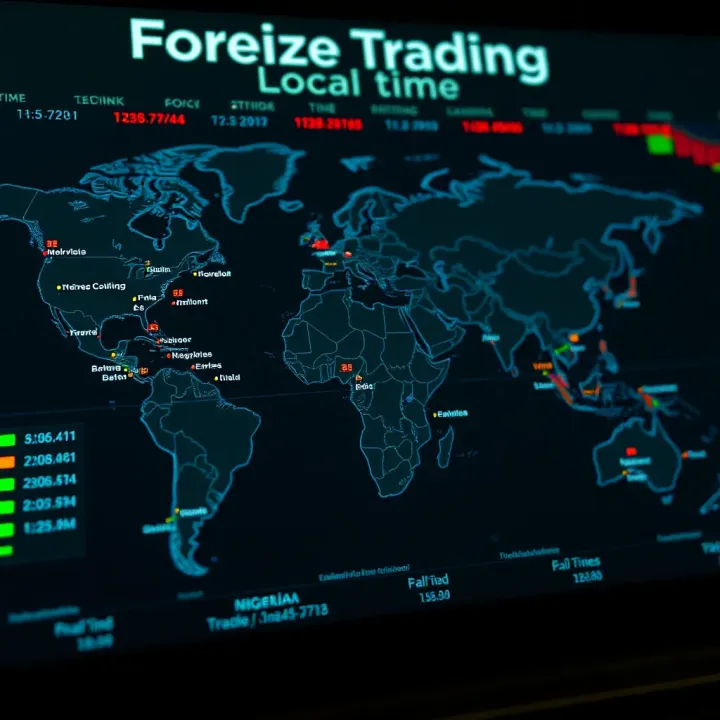
Forex Trading Sessions in Nigeria Time
🌍 Learn how to match global forex trading sessions with Nigerian time (WAT). Master timing to tap into ₦ markets and boost your trading game in Nigeria.
Edited By
Isabella Hughes
Trading sessions define the hours when markets across the world are open for buying and selling assets. For Nigerian traders and investors, understanding these periods in relation to West Africa Time (WAT) is key to making timely decisions and optimising profits.
Global markets operate primarily in four major sessions: the Sydney session, Tokyo session, London session, and New York session. Since Nigeria operates on WAT (UTC+1), there are overlaps and gaps that traders must note.
Sydney session runs mainly from 8:00 pm to 5:00 am WAT. This session marks the start of the global trading day but has comparatively lower liquidity for Nigerians.
Tokyo session follows closely, from 12:00 am to 9:00 am WAT, offering more volume particularly in forex but less activity in equities.
London session, perhaps the most influential for Nigerian traders, is active between 8:00 am and 5:00 pm WAT. Given the time proximity and London's financial importance, this period attracts high market movement and volume.
New York session runs from 1:00 pm to 10:00 pm WAT. Traders find it crucial because it overlaps with the London session for about four hours, increasing volatility and trading opportunities.
The overlap between London and New York sessions creates some of the most active hours, making it a hotspot for forex, commodities, and equities trading.
The Nigerian Exchange Group (NGX) itself operates distinctly, open from 9:30 am to 2:30 pm WAT, Monday through Friday. While this window is narrower than global markets, it fits neatly within the London session, allowing Nigerian investors to react in real-time to global market news.
Align your trading activities during the London and New York overlap (1:00 pm to 5:00 pm WAT) to take advantage of higher liquidity and tighter spreads.
Remember that power cuts and erratic internet can disrupt trades; consider backup power solutions and reliable data plans during peak hours.
Use global session timings to diversify trades – for instance, trading in the Asian markets during late evenings can provide round-the-clock chances.
Understanding when markets open and close in Nigerian time helps you plan strategies effectively, avoiding the rush and jumping ahead during lulls. This practical knowledge ensures you stay competitive in an increasingly connected financial world.
Trading sessions refer to specific time periods during which financial markets around the world are open for buying and selling assets. Understanding these sessions helps Nigerian traders plan their activities around the rhythms of global markets. This knowledge can mean the difference between capitalising on market volatility or missing out due to timing mismatches.
Different trading sessions influence market liquidity and price movements. For example, when the London and New York exchanges overlap, there is typically a surge in transaction volumes and opportunities. Nigerian traders aware of these patterns can better optimise their entry and exit points to suit their investment goals.
Trading sessions are essentially the working hours of stock exchanges, forex markets, and commodity markets across different regions. These sessions are staggered owing to the Earth’s rotation and local business hours, creating a cycle that spans 24 hours. For instance, while traders in Tokyo start their day, those in New York are just preparing to close theirs.
This continuous cycle offers traders multiple windows to engage based on when markets are most active. For instance, forex traders often target the London and New York sessions because of their high liquidity, while commodity traders might focus on specific Asian or American sessions depending on the asset.
Markets do not open or close simultaneously worldwide; each operates within its local time zone. The Tokyo Stock Exchange opens at 9:00 am and closes at 3:00 pm Japan Standard Time, while the New York Stock Exchange works from 9:30 am to 4:00 pm Eastern Standard Time. This difference affects when traders can execute orders and expect volatility.
For Nigerian traders, understanding these staggered timings means adapting their schedules and strategies accordingly. For instance, knowing when the London market opens (which aligns closely with West Africa Time) allows one to capitalise on early European market movements.
Nigeria operates on West Africa Time (WAT), which is UTC +1. This time zone influences Nigerians’ participation in global trading because it determines the overlap with primary markets. Since WAT closely matches London time during standard times (although the UK observes daylight saving while Nigeria does not), Nigerian traders find it easier to access European markets in their typical workday.
Understanding WAT allows Nigerian traders to align their trading hours with international markets. For example, the New York session opens at 2:30 pm WAT and closes at 9:00 pm WAT, making it accessible for traders after local business hours. Conversely, the Asian session generally runs from 2:00 am to 10:00 am WAT, requiring early-morning activity if traders want exposure there.
For Nigerian traders, matching local time with global sessions ensures they do not miss critical price movements and helps manage risks around periods of low liquidity.
Local traders must also consider Nigeria’s infrastructural challenges like intermittent power supply and internet connectivity. Planning trades during overlapping high-activity sessions can mitigate the risk of delays caused by technical glitches.
In sum, knowing how Nigerian time corresponds with international sessions is essential. It enables traders to pick the right moments for trading different assets, maximising potential gains while managing operational constraints effectively.
Understanding global trading sessions in Nigerian time is vital for Nigerian traders who actively participate in or monitor international markets. Each major trading session—Asian, European, and North American—operates during specific hours that coincide differently with Nigeria’s West Africa Time (WAT). Knowing these schedules helps traders time their trades better, capture opportunities when markets are most liquid, and manage risks posed by volatility at different hours.
The Asian trading session includes major markets like Tokyo, Hong Kong, and Singapore. These markets set the tone for commodities, currencies, and equities that Nigerian investors might be interested in, especially those following indices such as the Nikkei or commodities like palm oil and rubber. For example, Nigerian traders with exposure to Asian stocks or forex pairs involving the Japanese yen or Singapore dollar should keep an eye on developments during these hours.
Typically, the Asian session runs from about 1:00 am to 9:00 am WAT. This early start in Nigeria means most local traders participate before typical working hours, requiring vigilance for overnight price movements. Since this session overlaps with Nigeria’s late night and early morning, those trading during these hours often rely on digital platforms and watchlists to stay alert.
Trading activity in the Asian session can be less volatile compared to European or North American sessions, but it still presents moments of sharp price moves—especially when important economic data is released in Asian countries. Commodity markets linked to Asian demand often see transactions here. Understanding these patterns allows Nigerian traders to anticipate trends that may continue into later sessions.
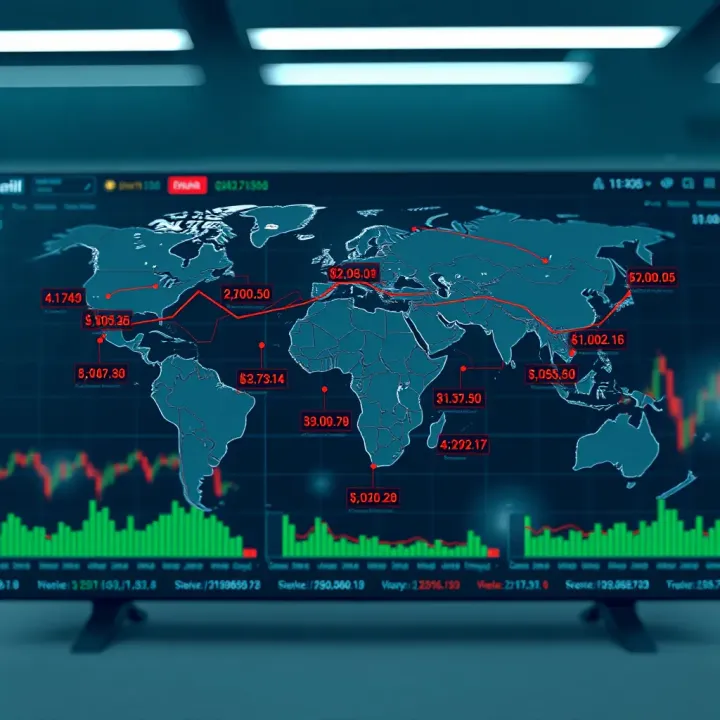
Europe’s key financial hubs—London, Frankfurt, and Paris—play a major role in global trade. For Nigerian traders, the European session is particularly relevant given London’s status as a global forex centre and Frankfurt’s role in European equities. Many currency pairs involving the euro and British pound see high trading volumes during this period.
The European session generally spans from 8:00 am to 4:30 pm WAT. This timing aligns closely with Nigerian business hours, making it straightforward for local traders to engage without the inconvenience of odd hours. Many banks and brokerages in Nigeria sync their operations with this session.
Importantly, the European session often overlaps with the tail end of the Asian session and, later, the start of the North American session. This overlap boosts liquidity, resulting in tighter spreads and more trading opportunities. For instance, the London-New York overlap from about 2:00 pm to 4:30 pm WAT is one of the busiest times globally, providing Nigerian traders a chance to catch rapid price movements.
The North American session covers major centres like New York and Toronto. These markets have a strong influence on commodity prices such as crude oil, gold, and agricultural products, which Nigerian traders may follow. The United States being a hub for major corporations also means significant economic data releases affecting global sentiment occur here.
In Nigerian time, the North American session typically runs from 2:30 pm to 10:00 pm WAT. This means Nigerian traders can engage with these markets in the afternoon and evening, often after their local business day.
This session is key for currency and commodity trading since it often reacts to important news such as Federal Reserve decisions or economic indicators from Canada and the US. Nigerian traders focused on forex pairs like USD/NGN or commodities linked to global supply chains pay close attention to price moves during these hours to optimise trading entries and exits.
Familiarity with these trading sessions and their timing in WAT can greatly enhance the strategic approach of Nigerian traders, improving their timing and risk management across diverse markets.
Summary: Nigerian traders who know when each global session runs in their local time can better plan trades, manage risk, and seize moments of strong market activity. The Asian session requires early attention; the European session fits neatly into Nigeria’s working day; and the North American session extends trading opportunities into the evening, covering a wide variety of financial products relevant to Nigeria's economy and investors.
Understanding how Nigerian markets fit within the global trading clock helps local traders synchronise their activities effectively. Nigerian markets, especially the Nigerian Exchange Group (NGX), operate on fixed hours aligned with West Africa Time (WAT). For traders, knowing this schedule is key to planning trade executions around times of optimal liquidity and market activity.
The NGX generally opens for trading between 9:30 am and closes by 2:30 pm WAT from Monday to Friday. These regular session hours are designed to encourage concentrated trading within business hours, giving investors clear time windows to place orders and respond to market news. For instance, a trader in Lagos or Abuja must arrange to complete portfolio adjustments within this five-hour period, balancing time constraints with market volatility.
Pre-market and post-market sessions exist but are limited in scope and often reserved for special transactions, such as block trades by institutional investors. These periods allow market participants to review order books or conduct preliminary trades before the official open or after close. However, Nigerian retail traders mostly focus on regular hours since pre and post-market activities are narrower and less liquid.
Local factors, particularly infrastructure challenges, sometimes affect trading hours. Power outages common during ember months may disrupt trading platforms or brokerages. To mitigate this, traders often depend on power backups and reliable internet services to maintain uninterrupted access. Moreover, regulatory decisions by the Securities and Exchange Commission (SEC) or unexpected national events can occasionally shift NGX operation hours.
Time zone differences present a significant challenge for Nigerian traders engaging global markets. For example, the New York Stock Exchange closes around 3:00 am WAT, well outside typical business hours in Nigeria. This mismatch means Nigerian traders must stay up late or early if they want to trade during North American sessions, which can affect decision-making quality due to fatigue.
Liquidity and volume in Nigerian markets also differ from major global exchanges. The NGX tends to have lower daily trading volumes and less frequent price movements than the London or New York exchanges. This means Nigerian traders must be cautious, as tight spreads and slow executions might reduce opportunities seen in bigger markets like the FTSE 100 or Dow Jones.
These timing and volume differences influence trading approaches for Nigerian investors. Many prefer focusing on NGX sessions for equities while using global sessions for forex or commodities trading through international online brokers. Traders also adjust risk management by setting realistic stop-loss orders and avoiding high leverage during off-peak Nigerian market hours to reduce exposure.
Synchronising your trading hours with both the NGX and relevant global sessions can improve execution and timing, but requires clear awareness of time zone gaps and infrastructure constraints in Nigeria.
Overall, knowing how Nigerian financial markets sit in the trading schedule allows investors and traders to balance local convenience against global opportunity efficiently.
Navigating various trading sessions requires Nigerian traders to align their strategies with session-specific opportunities and local realities. Efficiently timing trades, using technology smartly, and understanding market rhythms can improve outcomes considerably. Here are practical tips to maximise trading success while managing challenges like power outages and network instability.
Different asset classes tend to be more active during certain trading sessions. For instance, currency pairs involving the US dollar often see heightened activity during the North American session, roughly 2 pm to 10 pm WAT. Conversely, commodities such as crude oil might spike in the European session when Brent and WTI benchmarks react to global news. Equity traders focusing on Nigerian stocks should prioritise NGX trading hours (9:30 am to 2:30 pm WAT) to catch local volume and volatility.
Picking a session aligned with the asset class helps traders access better liquidity and tighter spreads, which are essential for cost-effective trades. So, a forex trader interested in EUR/USD would focus on the London/New York overlap, while a commodities trader might watch movements during Asian mornings. Assessing which session suits your trading style reduces guesswork and improves timing.
Many Nigerian traders juggle daytime jobs or family responsibilities, limiting availability during odd trading hours. For example, the North American session starts evening Nigerian time, often clashing with rest periods. Scheduling trades based on personal availability ensures decisions are timely and well-considered.
To mitigate this, setting trade orders with stop-loss and take-profit limits before sessions begin helps manage risk without constant monitoring. Also, developing a routine centred on prime local market hours—like NGX sessions—combined with selective engagement during global sessions aids balance between trading and everyday commitments.
Mobile trading apps from brokers and fintech platforms like Kuda or OPay have made market access easier for Nigerian traders. These apps often feature real-time quotes, charting tools, and instant order execution, vital for engaging across global sessions. USSD systems provide fallback access to simple trading actions when internet fails.
Such technology allows traders to participate actively without needing a full-time desktop setup. For example, a trader working an office job can place or adjust trades during break times using a mobile app. This flexibility is essential given frequent power issues and sometimes unreliable broadband connections in Nigeria.
Reliable internet and power are the backbone of efficient trading. Unplanned outages can cause missed opportunities or unmanaged risks. Investing in power backup solutions like generators or inverters alongside data bundles from multiple network providers safeguards continuous connectivity.
Besides, using mobile data as a backup ensures trades aren't halted by fixed-line broadband failures. For example, during the ember months when power supply worsens, having alternative power and internet source can be the difference between profit and loss. Planning for these factors is no longer optional but necessary.
Trading sessions have distinct volatility patterns; markets boom when overlaps occur, and thin out near session closes. The London-New York overlap (2 pm to 6 pm WAT) is especially volatile, presenting short-term profit chances but also increased risk.
Being familiar with these pulse points allows traders to anticipate when prices are likely to move sharply. For example, a forex trader may hold off entering late into a session if liquidity dries up, or tighten stops during high volatility spells to protect capital.
Since volatility affects risk levels, Nigerian traders must adapt trade size and stop-loss placement by session. During quieter periods like the Tokyo session for those trading USD pairs, smaller positions might minimise exposure to erratic swings. Conversely, during peak volatility, greater caution and stricter money management preserve capital.
Practical risk strategies include using trailing stops, limiting open positions during news releases, and avoiding over-leveraged trades when markets behave unpredictably. Nigerian traders who adjust risk actively across sessions tend to avoid unnecessary losses and sustain profitable streaks.
Mastering session-based tactics while considering local conditions offers Nigerian traders the best chance to navigate global markets confidently and profitably. Adaptability combined with technology and informed scheduling can turn challenges into stepping stones for success.
Understanding different trading sessions in Nigerian time equips traders with a significant edge. Knowing when global markets open and close, and how these align with West Africa Time (WAT), helps traders pick the right moments to act. This section sums up practical insights and spotlights trends shaping how Nigerians can better engage with trading opportunities.
Aligning trades with appropriate sessions: Choosing the right trading session based on the asset class matters a lot. For instance, forex traders active in the USD/NGN pair will find the North American session crucial, as this is when the New York market operates. Nigerian stock investors might lean more on the NGX session but can also watch European sessions for cues on global equities. By timing trades with these sessions, traders can tap into higher liquidity and volatility, helping to improve chances for profits.
Timing trades during overlapping sessions—like when London and New York markets are both open—often presents the best liquidity in forex markets. Nigerian online traders should also factor in daytime availability and local work hours to avoid missing key movements. A trader juggling a full-time job, for example, may find the early European session more workable than late-night US hours.
Being mindful of local realities like power and network: Trading success in Nigeria depends heavily on reliable electricity and internet. Frequent power outages and unstable connections can disrupt active trades, causing missed opportunities. Setting up a power backup using generators or inverters is a must to protect your trading continuity.
Besides power, stable internet is necessary especially when trading forex or buying/selling stocks through online platforms like GTBank’s investment apps or the NGX’s electronic trading system. Mobile data or fibre optic connections from providers such as MTN or Smile Communications often deliver the consistency needed, but it helps to have alternatives in case of network dropouts.
Good traders in Nigeria prepare for local challenges ahead to ensure they do not lose out during critical market moments.
Potential changes in local market hours: The Nigerian Exchange Group (NGX) may consider adjusting its trading hours to better align with global markets. For example, shifting opening or closing times could help traders better catch active European or North American sessions, improving foreign investor participation. Such changes, however, will need to reflect local business hours and regulatory considerations to prevent disruption.
Also, as Nigeria’s economy grows, we might see weekend or extended-hours trading introduced just like in more developed exchanges. This would offer Nigerian traders even more flexibility and opportunities, especially for those balancing multiple income sources.
How fintech innovations may influence trading access: Fintech platforms are reshaping how Nigerians join global markets. Apps like Flutterwave, Paystack, and OPay simplify payments and forex conversions, making it easier to fund trading accounts or withdraw profits.
Moreover, AI-driven analytics and mobile trading apps reduce the need for physical brokers and offices, letting more people trade anytime and anywhere. These tools also help manage risk and execute trades faster. As internet penetration and smartphone use rise, fintech will broaden access, especially for younger Nigerians entering investing and trading.
Nigerian traders who stay informed on both market hours and fintech trends will find themselves best positioned to maximise returns in an evolving trading landscape.
🌍 Learn how to match global forex trading sessions with Nigerian time (WAT). Master timing to tap into ₦ markets and boost your trading game in Nigeria.
Discover how to choose the best trading app in Nigeria 🇳🇬 with tips on features, security, costs, and trusted platforms for smooth & safe trading 📱💹
🤝 Discover how copy trading lets Nigerian investors mimic experts to boost trading skills. Learn pros, cons & key tips to start smart trading here! 📈🇳🇬
📈 Learn forex binary trading basics, key differences from traditional forex, risks, and practical tips to secure your ₦ in Nigeria's unique market environment.
Based on 11 reviews